By Candra · Licensed Medical Micropigmentologist & PMU Instructor ·
About the author
Candra is a Licensed Medical Micropigmentologist and PMU Instructor at Shaded & Bladed in Tulsa, OK. She has worked with clients experiencing alopecia, chemotherapy-related hair loss, and decades of over-tweezing damage.
Permanent makeup is one of the most impactful services for clients who have lost brow hair — whether from alopecia, chemotherapy, or decades of over-tweezing. At Shaded & Bladed in Tulsa, Candra — a Licensed Medical Micropigmentologist at 8026 S Memorial Dr — works with clients who have little or no existing brow hair and creates fully defined, natural-looking brows entirely from pigment. No existing hair is required. The technique is specifically designed to simulate the appearance of hair strokes or soft shading where no hair grows.
Alopecia and permanent makeup
Alopecia is an autoimmune condition that causes hair loss in patches (alopecia areata), across the entire scalp (alopecia totalis), or across the entire body including brows and lashes (alopecia universalis). The type and extent of hair loss varies significantly from client to client.
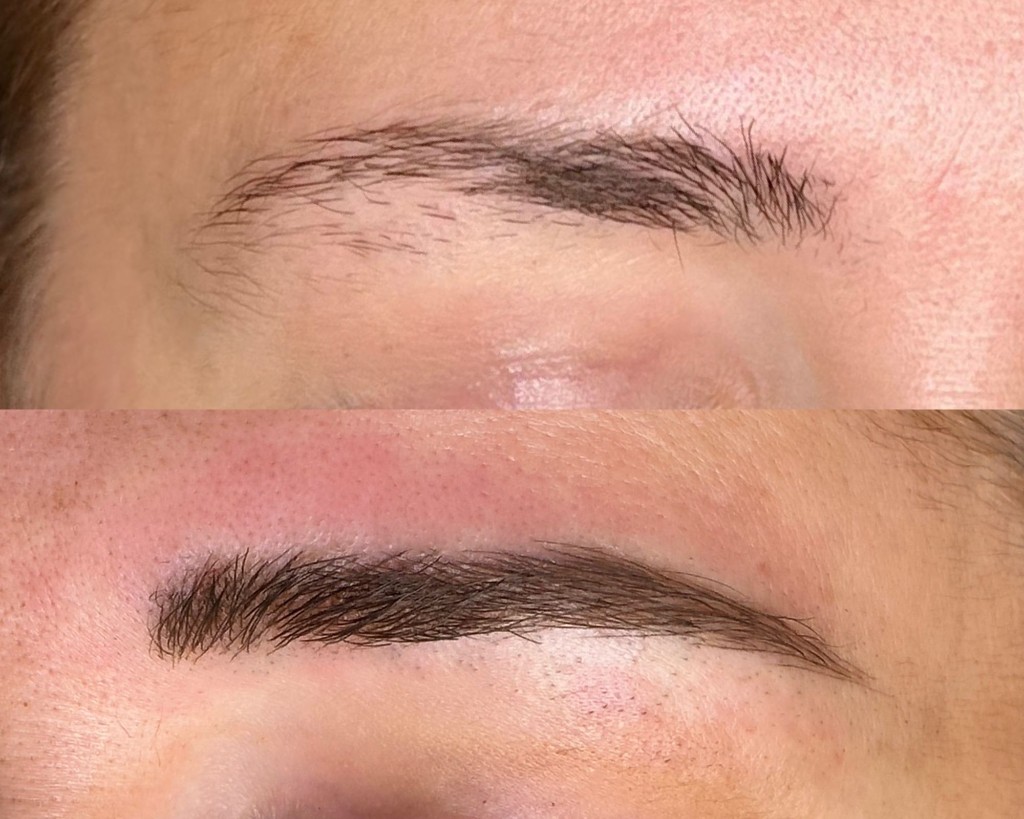
For clients with brow hair loss from alopecia, permanent makeup offers a solution that requires no existing hair. Nano brows deposit individual hair-stroke patterns in the pigment-free areas of the brow. The result looks like natural brow hair whether or not any real hair is present — because the technique mimics the appearance of hair, not the hair itself.
Powder brows create a soft, filled appearance that works equally well without existing hair. For clients with complete brow hair absence, powder brows are sometimes the more reliable technique because the result does not depend on individual stroke placement among existing hairs — the entire brow shape is defined by the shading itself.
If you have alopecia with fluctuating hair loss — periods where some brow hair returns and then falls out again — this should be discussed at the consultation. The brow mapping is designed around the brow structure, not the hair, so the result remains consistent regardless of whether hair is present or absent.
Chemotherapy and hair loss
Chemotherapy-related hair loss affects brows and lashes as well as scalp hair. For clients undergoing or recovering from chemotherapy, permanent makeup is a meaningful quality-of-life option — maintaining a natural, polished appearance during a period when looking in the mirror may be difficult.
Timing is an important consideration. During active chemotherapy, the skin can be more sensitive and healing may be slower or less predictable. Most permanent makeup artists, including Candra, recommend waiting until chemotherapy is complete and at least 3–6 months have passed before booking a PMU appointment. This allows the skin to stabilize and the healing process to be more reliable.
After chemotherapy ends, brow hair may regrow — sometimes differently than before. If brow hair returns after a permanent makeup session, the pigment remains visible alongside the regrown hair. Most clients find the combination looks very natural. If the regrown hair is different in color or texture, Candra can adjust the pigment color at the touch-up or color boost appointment.
Please discuss your current health status and oncology team's guidance with Candra before booking a PMU session during or after cancer treatment. She will review your situation and give you an honest recommendation on timing.
Over-tweezing damage — decades of sparse brows
Over-tweezing is one of the most common causes of sparse brows that Candra sees at consultations. The brow over-tweezing trend of the 1990s and early 2000s left many clients — now in their 30s, 40s, and 50s — with permanently reduced brow hair density. Hair follicles that are repeatedly traumatized eventually stop producing hair.
For these clients, permanent makeup offers full restoration of brow shape and density. Nano brows work especially well when some hair is still present — the hair strokes blend seamlessly with existing hair. Powder brows are often the better choice when the brows are extremely thin and a more defined, filled appearance is the goal.
The most meaningful part of this process for many over-tweezing clients is the restoration of facial symmetry. Decades of filling in sparse brows every morning often means living with a slightly different brow on each side, slight color mismatch, or inconsistent arch height. Permanent makeup corrects all of these in a single session, with refinement at the touch-up.
What to expect at the consultation and appointment
For clients with alopecia, chemotherapy history, or extreme sparseness from over-tweezing, the consultation at Shaded & Bladed is the most important step. Candra reviews your brow area, discusses your goals, and recommends the technique most likely to produce the result you want.
For clients without existing brow hair: the brow mapping step at the appointment is based entirely on your facial anatomy — bone structure, eye shape, forehead width, and natural brow bone position. Candra uses professional measuring tools to design a brow shape that looks proportional and natural for your face, not a generic shape applied without reference to your features.
The healing process for clients with minimal brow hair follows the same timeline as for clients with full brows — the ghost phase occurs, the touch-up at 6–8 weeks is required, and the results are fully assessed by week 6–8. One difference: without existing hairs to serve as reference points during healing, the pigment appearance during the ghost phase can look more dramatic than for clients with some existing hair. Knowing this in advance helps.
Call (918) 940-2888 or visit 8026 S Memorial Dr, Tulsa, OK 74133. Consultations are free — Candra can assess your situation and give you an honest recommendation.
Results vary by individual. Consult a licensed permanent makeup artist for a personalized assessment before booking.
Frequently asked questions
Shaded & Bladed · 8026 S Memorial Dr, Tulsa, OK 74133 · (918) 940-2888