By Candra · Licensed Medical Micropigmentologist & PMU Instructor ·
About the author
Candra is a Licensed Medical Micropigmentologist and PhiBrows Certified Artist in Tulsa, Oklahoma. She transitioned fully to digital nano needle technique because of its superior results on all skin types — including the oily skin common in Oklahoma's humid summer climate.
Nano brows vs. microblading is the most common question Candra gets at consultations at Shaded & Bladed in Tulsa. Both techniques create brows that look like natural hair strokes. Both use pigment deposited into the skin. But the tool, the technique, and the results are meaningfully different — and for most skin types, one option is clearly better.
The short answer: nano brows use a digital PMU machine with an ultra-fine needle. Microblading uses a manual hand tool with a row of tiny blades to make cuts in the skin. The machine approach gives the artist more control over depth and pressure, makes it compatible with all skin types, and tends to produce longer-lasting results. For most clients — especially anyone with oily skin — nano brows outperform microblading.
What Is Microblading?
Microblading is a manual brow technique that has been popular since roughly 2015. The artist uses a handheld tool — a small blade made of multiple fine needles arranged in a row — to manually cut tiny incisions into the skin and deposit pigment into those cuts. The result is a pattern of strokes that mimics the look of individual brow hairs.
Microblading was revolutionary when it arrived. Before it, permanent brow makeup tended to look solid and drawn-on. Microblading made natural-looking hair-stroke brows possible at scale.
The limitation is the tool. A manual blade cannot control pressure with the precision of a machine. Strokes can vary in depth across a single session depending on skin texture. On oily or thick skin, the incisions tend to blur and spread as the skin heals — resulting in strokes that look less defined in the healed result than they did immediately after the procedure. On very dry or sensitive skin, manual cuts can cause more trauma than necessary.
What Are Nano Brows?
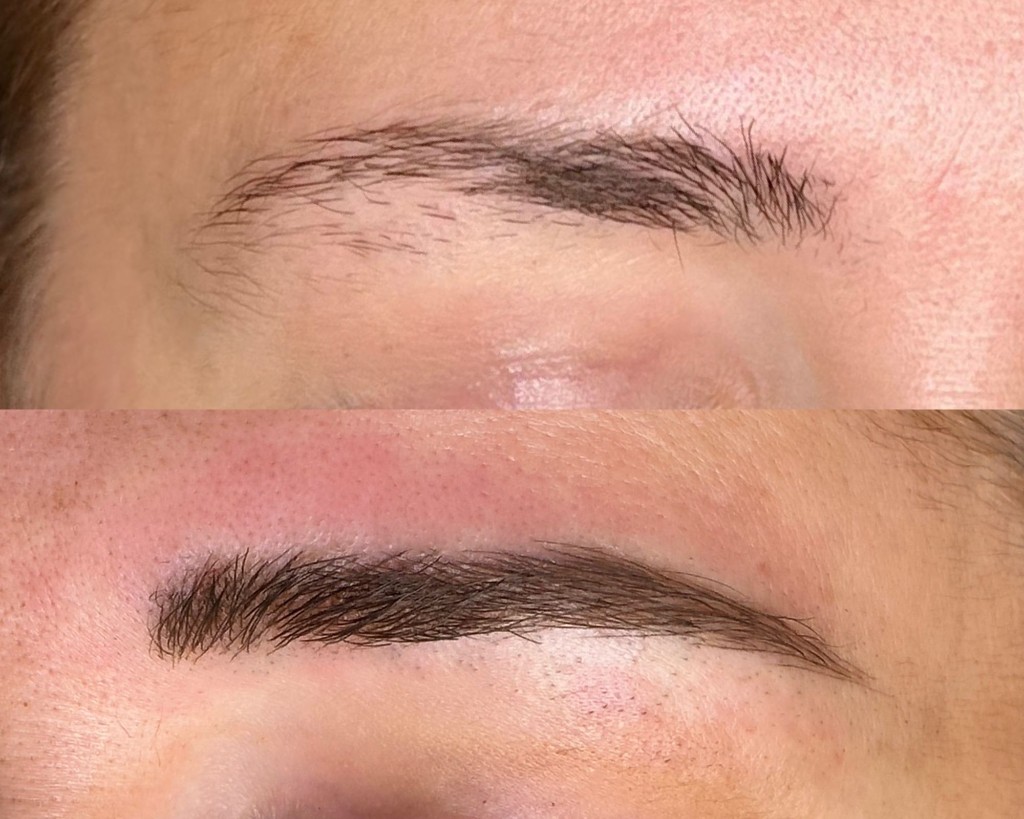
Nano brows use a digital PMU (permanent makeup) machine — the same category of device used for professional tattooing — fitted with an ultra-fine single needle called a nano needle. The machine moves the needle in and out of the skin at a consistent, controlled speed. The artist guides the tool to create hair-stroke patterns.
Because the machine regulates depth and pressure mechanically, the results are more consistent across different skin types. Oily skin, which causes microblading strokes to blur, responds much better to the machine technique — the needle penetrates at the correct depth without over-saturating the tissue around each stroke.
Nano brows are what Shaded & Bladed offers. Candra, a Licensed Medical Micropigmentologist, trained specifically in digital technique and does not offer manual microblading. Nano brows start at $400 and include the 6–8 week touch-up appointment.
Nano Brows vs. Microblading — Side by Side
| Factor | Nano Brows | Microblading |
|---|---|---|
| Tool | Digital PMU machine | Manual hand blade |
| Stroke type | Machine-pressed nano needle strokes | Hand-cut incisions |
| Best skin type | All skin types, including oily and mature | Dry to normal only |
| Touch-up frequency | Every 1–3 years | Every 12–18 months on average |
| Healing time | 7–14 days | 7–14 days |
| Skin trauma | Lower — controlled machine depth | Higher — manual blade pressure varies |
| Stroke precision | Consistent across skin types | Can blur on oily or thick skin |
| Starting price (Tulsa) | $400 at Shaded & Bladed — touch-up included | Varies; touch-up often sold separately |
| Available at Shaded & Bladed | ✓ Yes | ✗ Not offered |
Here is how the two techniques compare across the factors that matter most when choosing a brow service.
Which Technique Lasts Longer?
Nano brows typically need a touch-up every 1–3 years. Microblading typically needs a touch-up every 12–18 months for most clients, and on oily skin that window shrinks further.
The longevity difference comes down to how each technique deposits pigment. The machine deposits pigment at a consistent depth in the dermis. Manual blading is less precise — strokes often go slightly shallower or deeper depending on the artist's hand pressure and the skin's resistance in each area. Shallow pigment fades faster. Inconsistent depth means uneven fading.
On either technique, annual color boost appointments at 12–18 months extend longevity meaningfully. A color boost at Shaded & Bladed is $200 and refreshes the pigment without redesigning the shape.
Which Is Better for Oily Skin?
Nano brows are significantly better for oily skin. This is not a minor difference — it is the single most important reason many artists have transitioned away from microblading entirely.
Oily skin produces more sebum. Sebum breaks down pigment from the surface and fills the channels left by manual blade cuts during healing. The result on microbladed oily skin is strokes that blur, lose their definition, and fade faster than on dry skin. Many oily-skin clients who got microblading report being unhappy with their results by the 8–12 month mark.
The machine technique does not create open channels — it deposits pigment in individual punctures that heal cleanly. Oily skin handles this much better. Candra works with clients of all skin types at our studio at 8026 S Memorial Dr, Tulsa, OK. If you have oily skin and have been told you are not a candidate for permanent brows, call us at (918) 940-2888 — nano brows may be exactly what you need.
Is One More Painful Than the Other?
With proper numbing, both techniques are very manageable. Topical anesthetic is applied 20–30 minutes before either procedure begins. Most clients describe the sensation as light pressure or a scratching feeling rather than pain.
Of the two, microblading tends to produce more discomfort because the manual blade creates longer, continuous cuts in the skin rather than the rapid needle punctures of a machine. Some clients with sensitive skin find the machine technique noticeably more comfortable after the first few minutes as the skin adjusts. Individual experience varies.
Why We Offer Nano Brows Instead of Microblading
Shaded & Bladed made a deliberate choice to offer nano brows and not microblading. The reasons are practical: nano brows produce better results on a wider range of skin types, last longer between sessions, and involve less skin trauma.
For clients — especially in Oklahoma where oily skin is common due to the humid summer climate — the machine technique is the better long-term investment. A result that only needs a touch-up every 1–3 years at $400 is a better value than a result that needs one every 12–18 months at a similar price and requires more frequent touch-ups.
This matters especially for clients whose schedules leave no room for a morning brow routine. Nurses at Saint Francis Health System, Hillcrest Medical Center, and Ascension St. John who start 6am patient-facing shifts come to us specifically because nano brows survive a full shift — including sweat, a mask, and fluorescent lighting — and still look polished. Teachers at Jenks, Union, and Broken Arrow public schools tell us the same thing: one less step before an 8am class makes a meaningful difference across a school year.
For most skin types — especially oily or sensitive skin — nano brows deliver more consistent, longer-lasting results than microblading. Book a free consultation at Shaded & Bladed and Candra will assess your skin type and confirm which approach is right for you.
Results vary by individual. Consult a licensed permanent makeup artist for a personalized assessment before booking.
Learn more
Frequently asked questions
Shaded & Bladed · 8026 S Memorial Dr, Tulsa, OK 74133 · (918) 940-2888