By Candra · Licensed Medical Micropigmentologist & PMU Instructor ·
About the author
Candra is a Licensed Medical Micropigmentologist and PMU Instructor at Shaded & Bladed in Tulsa, OK. She works with clients across all skin tones and tailors pigment selection and technique accordingly.
Permanent makeup works well on deeper skin tones. Clients with Fitzpatrick IV, V, and VI skin types get excellent results with nano brows, powder brows, and lip blushing at Shaded & Bladed in Tulsa. But darker skin does require different pigment selection and technique considerations than lighter skin. Candra, a Licensed Medical Micropigmentologist at 8026 S Memorial Dr, accounts for these differences at every consultation — pigment that heals beautifully on light skin can look very different on deeper skin, and getting this right starts at the color selection stage.
The Fitzpatrick scale and why it matters for PMU
The Fitzpatrick scale classifies skin based on its response to UV exposure, running from Type I (very fair, always burns) to Type VI (deeply pigmented, never burns). It is widely used in permanent makeup to predict how skin will heal and how pigment will appear after healing.
For darker skin tones — Fitzpatrick IV (medium to olive brown), V (dark brown), and VI (very dark or ebony) — the higher concentration of melanin in the dermis affects how deposited pigment appears. Two specific effects matter most:
**Color shift during healing:** Lighter, ash-based pigments intended for medium skin tones can shift toward gray, blue, or an ashy appearance on darker skin during healing. This happens because the undertone of the pigment is suppressed or distorted by the deeper melanin background of the skin. The healed result looks unnatural.
**Hyperpigmentation risk:** Deeper skin types are more susceptible to post-inflammatory hyperpigmentation (PIH) — darkening of the skin in response to irritation or trauma. This is a real consideration with any skin-penetrating procedure. Proper technique depth and aftercare minimize this risk, but it is worth understanding before booking.
Pigment selection for deeper skin tones
Warm-based pigments produce the most natural healed results on deeper skin tones. Pigments with brown, warm taupe, or black undertones that contain no blue, purple, or gray base create brow results that read as natural hair color on darker skin.
Ash or cool-toned brow pigments — which look very natural on Fitzpatrick I–III skin — can resolve to an ashy or bluish appearance on Fitzpatrick IV–VI. The melanin in darker skin suppresses the warm undertones that balance these pigments on lighter skin.
For lip blushing on darker skin: choosing a pigment that complements — rather than contrasts — the existing lip tone is critical. Pigments chosen without accounting for the existing lip color can produce a result that looks artificial or muddy after healing. Clients with deeply pigmented natural lips often benefit from darker, richer pigment choices rather than the soft pink tones that work on lighter skin.
Candra selects pigments based on the individual client's Fitzpatrick type, natural hair color, and existing brow and lip tone at every consultation — not from a standard menu applied uniformly.
Technique considerations — which service works best
Both nano brows and powder brows can work well on deeper skin tones. The choice depends on skin type and the individual client's goals:
**Powder brows:** The shading technique is generally safer on very dark skin tones because it avoids the precision stroke work where fine lines can create a risk of hyperpigmentation. The airbrushed result also complements deeper skin beautifully — a soft, filled brow that reads as definition rather than added hair.
**Nano brows:** Individual hair strokes require careful technique depth calibration on Fitzpatrick V–VI skin. Applied correctly, they produce stunning, natural-looking results. The risk of hyperpigmentation in individual stroke channels is real but manageable with the right approach and experienced technique.
Clients with a history of keloid scarring should discuss this with Candra before any permanent makeup procedure. Keloid-prone skin may not be a good candidate for nano brow stroke work — this is a contraindication that needs to be reviewed individually.
For lip blushing on very deep skin: the technique works well when pigment selection is right. The healing process on deep skin can look different — less dramatic peeling, sometimes more initial darkening — but the outcome with proper pigment and technique is excellent.
What healed results look like on deeper skin
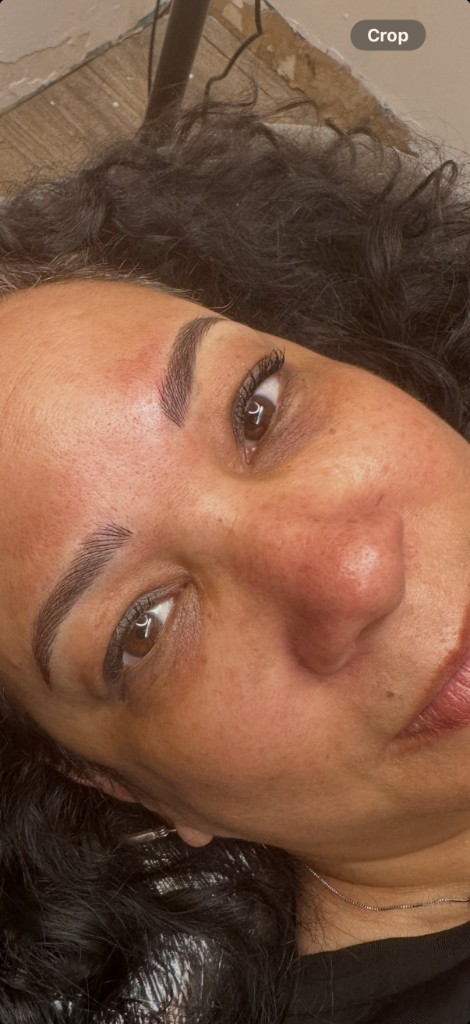
With correct pigment selection and technique, healed permanent makeup on Fitzpatrick IV–VI skin looks natural and polished — not obviously artificial or drawn-on. The brow or lip result reads as well-groomed, defined features rather than added color that does not match the skin.
The ghost phase (week 2–3) occurs regardless of skin tone. The color shift during ghost phase may look slightly different on deeper skin — the pigment sometimes appears more muted rather than fully washed out — but the process is the same.
Healed results on deeper skin typically require the full 6–8 week window to assess accurately. The 6–8 week touch-up included in every Shaded & Bladed service allows Candra to refine any areas where pigment and skin tone did not interact as expected.
Candra serves clients from across the Tulsa metro and is experienced working with the full range of skin tones in the community. Call (918) 940-2888 to schedule a free consultation at 8026 S Memorial Dr, Tulsa, OK 74133.
Results vary by individual. Consult a licensed permanent makeup artist for a personalized assessment before booking.
Frequently asked questions
Shaded & Bladed · 8026 S Memorial Dr, Tulsa, OK 74133 · (918) 940-2888