By Candra · Licensed Medical Micropigmentologist & PMU Instructor ·
About the author
Candra is a Licensed Medical Micropigmentologist and PMU Instructor at Shaded & Bladed in Tulsa, OK. She has guided hundreds of lip blushing clients through the healing process.
Lip blushing healing is the most dramatic of all permanent makeup healing processes — and the most misunderstood. At Shaded & Bladed in Tulsa, Candra — a Licensed Medical Micropigmentologist at 8026 S Memorial Dr — tells every lip blushing client the same thing at the close of their appointment: the worst part of healing is week 2, and it is completely normal. This guide walks through every stage so you know what is coming.
Day 0 — Immediately after the session
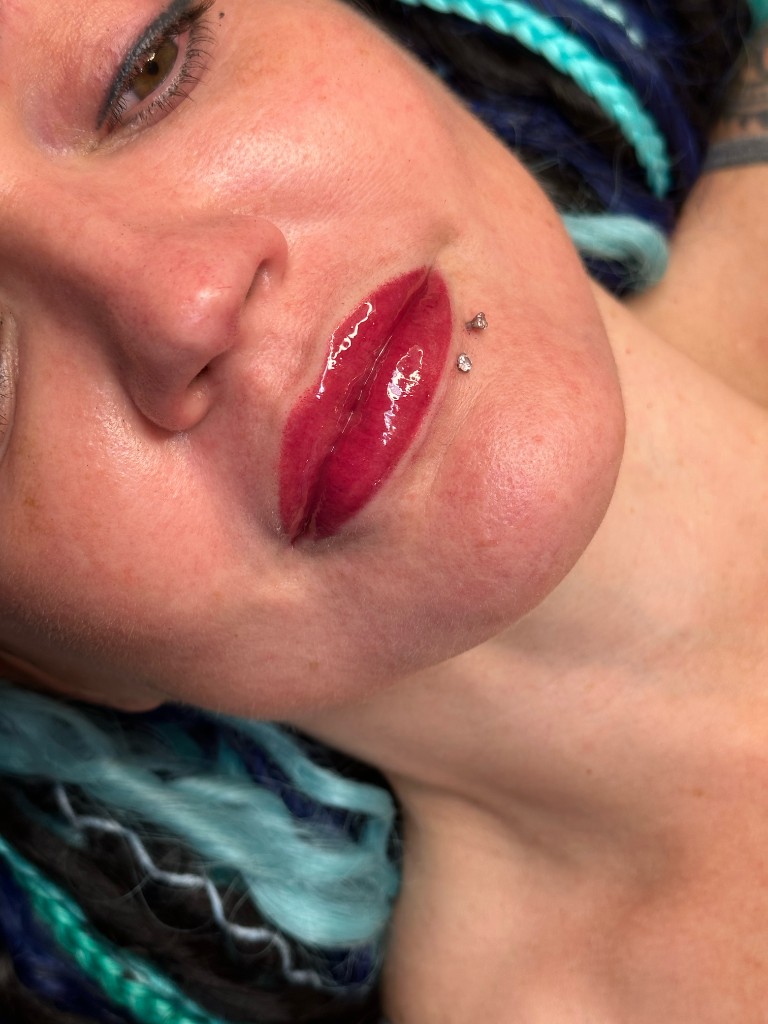
Right after your lip blushing session, your lips will look vivid, bold, and slightly swollen. The color is at its most saturated — you are seeing the pigment before any skin cells form over it. The color will appear more intense than the final healed result, often by a significant amount.
Mild swelling is normal immediately after. Most clients notice this resolves within a few hours, though some swelling may be visible the next morning depending on individual response. Cold compresses held gently against the lips can help manage swelling — do not press hard or rub.
Do not apply anything to the lips except what Candra specifically instructed. No lip balm, no SPF, no makeup. For the first two hours, blot gently with a clean cotton pad every 30 minutes to remove lymph fluid.
For the first 3 days, eat soft foods and drink through a straw when possible. Cut food into small pieces rather than biting directly. This minimizes the movement and friction on the lip surface during the most delicate phase of healing.
Days 1–3 — Darkening and sensitivity
On days 1–3, the lips may darken as the pigment oxidizes and the skin begins healing over the treated area. The color is still rich and vivid. The lips may feel slightly tight, dry, or sensitive.
Keep lips clean. Gently wash once daily with a fragrance-free cleanser and clean fingertips. Pat dry with a clean paper towel. Apply a thin layer of the healing ointment provided by Candra if instructed.
Avoid kissing during this period — the friction and bacteria contact can disturb the healing surface. Avoid spicy foods, which create lip irritation. Avoid hot beverages — heat increases blood flow to the area, which affects pigment as it sets.
Do not eat anything acidic (citrus, vinegar-based foods) directly against the healing lips during these first few days. Acidity affects the healing pigment.
Days 4–7 — Peeling
The lips begin to peel between days 4 and 7. This is the phase that concerns clients most — and the phase where the most healing mistakes happen.
**Do not pick the peeling skin.** Full stop. This is the single rule that most directly determines the quality of your healed result. Peeling lip skin carries pigment with it. Clients who pick during this phase often see patchy, uneven healed results that need more corrective work at the touch-up.
The peeling may appear tinted — small pieces of lip skin with visible color. This is the surface layer shedding, not the pigment disappearing. The retained pigment is in the deeper skin layer and is not going anywhere when the surface peels naturally.
Let the flakes fall off on their own. They will come off during meals, sleep, and normal daily activity. After 7 days, most of the surface peeling is complete.
Week 2 — The ghost phase (most dramatic on lips)
The lip ghost phase, occurring around week 2, is the most dramatic ghost phase of any permanent makeup service. The color may appear to vanish almost entirely. Lips may look nearly the same as they did before the procedure.
This is completely normal. This is not failure. This is the predictable result of the skin cycling through its healing process.
The ghost phase on lips is more pronounced than on brows for a specific reason: the lip skin is thinner and cycles through cell renewal faster. The new skin forming over the pigment is more opaque on the lips, making the ghost phase look more dramatic even though the retained pigment is still present.
Clients who contact the studio during week 2 in a panic are redirected to this exact explanation. The pigment is still there. It will become visible again as the healing skin matures.
During the ghost phase, sun protection is especially important. Oklahoma summer sun is intense — apply SPF lip balm every morning. UV light during the healing window degrades pigment faster than at any other stage.
Week 3–6+ — The true healed result
Starting around week 3, color becomes gradually visible again. By week 4–5, most clients see a clear, soft version of the healed result emerging. By weeks 6–8, the lips are fully healed and the pigment is stable.
The healed result is softer, more natural, and less saturated than the day-0 appearance. This is intentional — lip blushing healed results look like your lips with a hint of flush and definition, not like lipstick. The color adds warmth and evenness without looking made-up.
Your 6–8 week touch-up appointment at Shaded & Bladed is included in the service price and is scheduled for this window. Candra assesses retention and refines symmetry and color in areas that may have healed unevenly. Do not assess your final result before this appointment.
For clients from across the Tulsa area — Broken Arrow, Bixby, Jenks, Owasso, Midtown — the touch-up appointment is the step that completes the result. Call (918) 940-2888 to confirm your touch-up if you have not already.
Results vary by individual. Consult a licensed permanent makeup artist for a personalized assessment before booking.
Frequently asked questions
Shaded & Bladed · 8026 S Memorial Dr, Tulsa, OK 74133 · (918) 940-2888