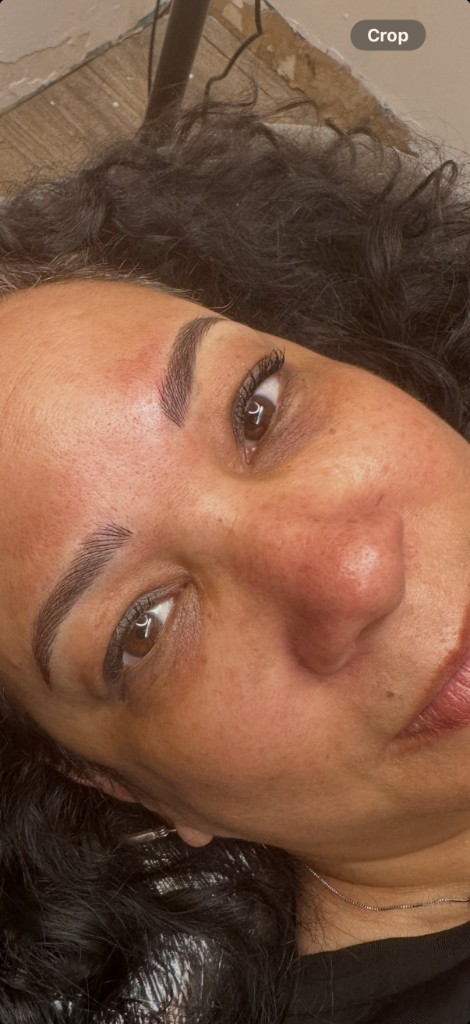
By Candra · Licensed Medical Micropigmentologist & PMU Instructor ·
About the author
Candra is a Licensed Medical Micropigmentologist and PMU Instructor at Shaded & Bladed in Tulsa, OK. She works with active clients across the Tulsa metro and adjusts aftercare guidance to fit real fitness schedules.
Intense exercise is restricted for 7–10 days after permanent makeup. This is one of the most common aftercare questions Candra gets at Shaded & Bladed in Tulsa from clients who train regularly — Orangetheory members, CrossFit athletes, Tulsa Run participants, Turkey Mountain hikers. The restriction is real, but it is specific: what matters is heavy sweating directly on or near the treated area, not all physical activity. Light walking, yoga, or low-intensity movement is fine from day one.
Why sweat affects permanent makeup healing
Sweat is essentially saltwater — a combination of sodium chloride, urea, and other compounds produced by sweat glands in the skin. During the first 7–10 days after a permanent makeup session, the treated skin is in active healing. The pigment is settling into the dermis, and the surface skin has not yet fully closed over it.
Sweat disrupts this process in two specific ways:
**First, salt draws pigment toward the surface.** The osmotic pressure of concentrated salt on healing skin can push pigment upward, toward the surface layer, before it has fully anchored in the dermis. This affects retention — the pigment is more likely to shed with surface skin rather than staying put in the deeper layer where it belongs.
**Second, sweat creates a bacteria-rich environment on the treated skin.** Sweat glands in the face and scalp produce significant bacterial load during intense exercise. Open or healing skin exposed to high bacterial counts during the healing window is at risk of infection. This is not a common outcome, but the risk is real and preventable.
The restriction is not about sweating slightly — it is about sustained heavy sweating directly on or near the treated area.
What you can do in the first 7–10 days
The restriction is specific, not total. Here is how to modify your routine without losing momentum:
**Light walking:** Fine from day one. A 30–60 minute walk at a comfortable pace that does not produce heavy sweating on the face is not a concern. River Parks, Turkey Mountain's gentler trails, or the south Tulsa residential corridors are all fine options. Keep sunscreen over the treated area.
**Yoga and stretching:** Low-intensity sessions at normal room temperature are fine. Avoid hot yoga — the combination of heat and sweat in the room creates the same conditions as a gym workout.
**Lower body strength work:** If you typically do gym sessions, lower body exercises that do not cause significant facial sweating may be manageable. Monitor your actual sweat output — if your face is dripping, the exercise intensity is too high for this window.
**Avoid:** Running, high-intensity cardio (Orangetheory F45 or similar), CrossFit WODs, cycling classes, outdoor summer training in Oklahoma heat, and anything that produces significant facial sweating. The Tulsa Run is one of the most popular local events — if your training schedule puts you in the heavy-training window during your post-appointment period, plan accordingly.
When you can return to full activity
Most clients can resume full activity — including running, CrossFit, and swimming — after day 10. By this point the surface skin has closed over the treated area and the pigment is stable enough to tolerate normal sweating.
Swimming has a longer restriction: avoid pools, lakes, and hot tubs for a full 4 weeks. Chlorine is a mild exfoliant and lake water carries bacterial load — both are problems during the extended healing window even after the surface is closed. Arkansas River kayakers, Keystone Lake regulars, and Skiatook Lake visitors should plan around this restriction.
At the 10-day mark, sweat-proofing your brows and lips with SPF becomes the primary maintenance step. Once fully healed, permanent makeup is highly durable through active lifestyles — that durability is one of the main reasons active clients in Tulsa choose it.
Planning your workout schedule around your appointment
If you are a regular trainer, plan your appointment timing carefully. A few strategies that work well:
**Schedule your appointment after a competition or training peak.** If you are training for the Tulsa Run, schedule your PMU appointment after the event — not during peak training. A 7–10 day reduced-intensity window is easier to absorb after a race than before it.
**Use the healing window as a deload week.** Many fitness-focused clients schedule their appointment during a planned recovery week. The 7–10 day restriction aligns naturally with a lighter training block.
**Morning appointment, light evening.** If your appointment is on a Tuesday morning, expect Tuesday and Wednesday to be rest or light activity days. By the following Tuesday, full activity resumes.
Candra works with active clients across the Tulsa metro — from River Parks runners to CrossFit athletes in Broken Arrow and Bixby. Call (918) 940-2888 or visit 8026 S Memorial Dr if you have specific questions about your training schedule and appointment timing.
Results vary by individual. Consult a licensed permanent makeup artist for a personalized assessment before booking.
Learn more
Frequently asked questions
Shaded & Bladed · 8026 S Memorial Dr, Tulsa, OK 74133 · (918) 940-2888